Showing posts with label death. Show all posts

Tuesday, November 20, 2007

...


I wake up, stretch. I make tea, cross the room, I move back again. Turn on the computer, turn it off again, shut the door behind me, check it's closed tight. Down the stairs, out on the street, through the rain, passing windows with the lamps just coming on in them, past windows with sticky signs in them selling flights to New York, Paris and the Costa Brava. I am happy. I'm on the move. There is a safety in my step. I buy a scarf. I scour the wet streets for the reflection of shop lights. There's a warm fuzzy feeling inside me. I walk home.

But back inside, a familiar feeling, one which usually comes only during the night, when I and the world are fast asleep. It came last night; I awoke abruptly and stumbled, half-asleep to the bathroom. Night-time is when another me emerges from deep inside, a me I don't recognise. A time for blackness to come running, for a cold clammy fog to swallow up what is not yet left of the daylight. Blocking up my throat, swelling my chest, nothing to be seen. My eyelids droop to the pillow exhausted. I become an invisible ghost, meandering through this room, that room, finding every single one of them empty.

These night tremors, night terrors, which boil me in my own fear, disappear with the morning. I'm left with no memory but the feeling of death on my lips. But was it the man I spotted lurking outside my changing room today, unconvincing as he examined the ties, or the charity shop assistant who looked at me and said "A five pound note? For a 50p scarf?" that chased my heart back down that black road that goes from golden to ash; morning turning into an endless vacancy of stars? I am left quite alone then in the mechanics of my life, oiling the cogs, keeping it moving, mending and re-structuring, whilst the pit opening up in my stomach tells me that this destination is to nowhere, no place to finally rest except the grave, where loss is the only thing I can be certain will never leave. I see Mum's hand, inert on the white sheet. I see my father, turned away. I see three little girls, running.

I realised yesterday, as I discovered a tear welling up in my eye whilst I watched a James Blunt video, that I must be pre-mentstrual. There is no other reasonable explanation for such shocking behaviour. Even so, today I put down my pen, curled up on my bed and let myself fall into the absence, into all the things I wish I had in my life, that I will never have, that are gone, non-returnable, no deposit, finished, done with, ended, vanished. And always at the bottom of it, is my Mum's hand, the softest hand in the world. Once it stroked my hair. Now I stroke it in my mind, kiss it lightly and pray for its warmth to stay with me for just a little while longer.

My life is ok. I can't complain. But when a mood such as this takes hold, there's only a bullet or a hatchet that could feel more sharp and more deadly. Outside, it is raining again, as it has been for days, people strapped into their houses as the water pelts down the streets. I am glad for security. I do not feel guilty for wanting what's safe. No, actually, that's far from true. I am perhaps the greatest devotee of the God of Loss. A true believer. But blackness inevitably passes, leaving only a trace of its scent; a cool, musky, damp scent of freshly turned earth.

Sunday, March 18, 2007

A history of my Religion


A couple of Saturdays ago, I went with a friend to Catholic Mass at a local Brighton church. The yearning to go there had started before Christmas, when feelings of grief over my Mum's condition peaked, and I couldn't see any real point in existence, if where it was to lead ultimately was simply dissolution, pain and death. The need for something big enough to hold this experience came to a crisis point.

What actually moved things on for me was listening to a talk by a Buddhist Order Member, Danavira, on death and dying. I sat, lights out, in my front room for two hours listening to the recording. The impact of it went directly into my veins and bones. It took on the horror, the devastation, the messiness and complexity of death, and ultimately, its utter profundity. Danavira's words were big enough to meet the immensity of my insights and emotions over what it means to live and to die, to be born and to decay.

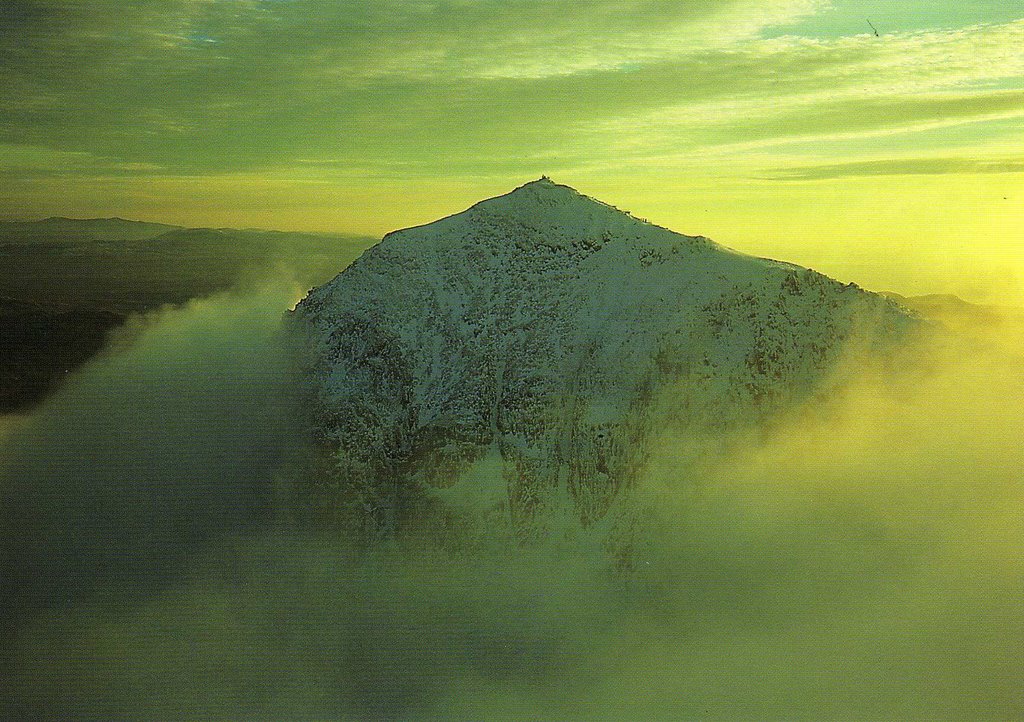
Months earlier, in October, I walked up Snowdon with Bob, the first time I have ever hiked up a significantly large mountain. I found, in the climbing, that, having seen my Mum in hospital just days before, this was a mountain huge enough and powerful enough to take my grief, big enough even to hold Mum herself in her dying state. So tiny, I was, climbing the vast expanse of its stomach, I knew that the mountain understood and held me fast. Now, I am not speaking symbolically or poetically here when I speak of the mountain holding me, I mean it absolutely literally. I tangibly felt that presence and character of the mountain surrounding me. Because of that, all my grief and sorrow turned to amazement. That one primal, unanswerable question that I ask myself in every moment of grieving, "How come?" returned to me in the single voice of the mountain, not through words, but through a sound. It was a resonating hum, that the peaks and the valleys and the woodlands and birds and the small climbing bodies of hikers were all making. This is it. This is my answer. Everything I need is here.

I was surprised, then, when it was talking about Saints and Catholic Mass with some Catholic friends of mine that aroused such a strong feeling of yearning in me, rather than Buddhism. After over eight years of Buddhism being almost my whole world, in terms of way of life, friends, commitment and philosophy, I have drifted from it over the last few years, in order, I think, to go more deeply into my own experience of how things are and who I am, through writing, poetry and making music. Language, specifically poetry, and music, unlock realms of reality and experience I've never known before, and I can only seem to experience them through creating in this way.

And when I had what might be called mystical experiences some years ago, which totally tore down and rearranged my life, it wasn't Buddhist teaching that I felt was being revealed to me directly, but a direct and non-rational experience of healing, grace, and the presence of angels. This disturbed me greatly at the time, as it didn't fit with what I believed of reality, and not many people around me seemed to know what I was on about; only the the reiki healers, the lost shamans, the acid casualties, the people who had found God on the roadside.

I have always been attracted to the imagery of Christianity, to the blood and redemption, the wounds of Christ, the choirs of angels and the Saintly lineage. But there is more to it than that. I am drawn to the lineage of Christian mystics in the same way that I am drawn to the lineage of Nyingma cave-dwellers, or the seekers of Divine union in Sufism. The practice of direct communion with God, if you call it that, or with Reality or The Divine, if you call it that instead, feels like the truest form of practising any religion for me personally. It is helpful at times for someone to tell me about God or The Buddha or the holiness of existence, but ultimately, I have to plug into that directly myself. And that is never easy. But I relate to the convulsions and stripped back wonder of certain Saints, the fighting of demons in the mountains, the visions, revelations, hallucinations, the manifestation of stigmata, the terrible angels of beauty descending. And I relate because it feels like a world that I already live in.

Going to Mass that day blew my mind. The ritual blew my mind. No wonder the Spanish go to the bullfight on the Saturday and then take Communion on Sunday. The two seem inextricably entwined, to me, bullfighting and Catholicism. And the Mass spoke to parts of me that even Buddhism has not reached. It is poetry to me, amazing, cataclysmic poetry. And, if I look at it it as anything but poetry, in the biggest sense of the word, my fear is that it is also quite possibly a form of madness. In this way, I am still scared of Catholicism, rightly or wrongly, in, as one overseas friend described it, its strange rites of supernatural cannibalism. But then I have always been attracted to things that dwell in equal shares of darkness and light, and poetry did always tread those pathways between the sane and the crazily lost.

I was scared at the thought of returning to the Convent. I was scared that I would be disappointed by what I found there. I was scared that I would not be disappointed and that it would show me all I hoped for and suspected was there.

When I rang the Convent bell, an old nun came to the door and invited me in. I said to her "I used to live in the house next door, for over twenty years. But we moved out years ago." I had no idea if she was even at the Convent during that period, as I know that most of the nuns from then have either moved on or died. She smiled at me and said " Are you Clare?"

Monday, January 08, 2007

fire burned and blew out flowers

This morning I've been re-listening to that little ray of sunshine himself, Bonnie 'Prince' Billy. He's such a cheery lyricist. Songs such as Another Day Full Of Dread, Today I Was An Evil One and of course I See A Darkness make up this sunny and light album. One of my absolute favourites on it, however, is Death To Everyone:

I am here/right here/where god puts none asunder/and you/in black dress and black shoe/you do/invite me under

One of the hardest things about grief, I think, is the insidiousness of it, the way it filters into every atom, every fissure of your life. How it creeps up on you when you least expect it. Making a cup of tea, the radio on, one minute you're singing along, the next you're on the floor doubled over. What happened? Perhap it was a line of a song, perhaps, just a word. Maybe it was the way your spoon clinked in your cup as you stirred in the sugar. Maybe it was noticing that picture that wasn't hanging straight on your wall and adjusting it, suddenly you find yourself staring at it, lost in its image.

It is a hard process to understand in oneself, because it is sometimes so unpredictable and apparently illogical. For me, there can be several weeks where it follows me everywhere I go, it's that black dog I simply can't shake off. Then eventually I emerge, new again, still alive, still whole, still able to smile, perhaps smiling even more. Other times I can go in and out of it on a daily, even hourly basis, one minute writing out some plan for my life, preparing an application form, the next, I am inconsolable, unable to lift a pen.

It is perhaps even harder to understand in another person sometimes. And the thing about grieving is that the only thing you can do really is carry on, is to get on with life, because you need the straight and narrow to keep to whilst your world falls apart, it's the concrete and the road signs that keep your nerve steady and your feet moving when there's a tornado tearing through all the land around you which you once called your home.

You keep looking ahead, eyes on the next step forward. And when you come across a patch of meadow that hasn't been hit you say "hey, look at those daisies, look at those buttercups, aren't they beautiful!". And they are, and you do really see it, you really can smell the grass and the earth beneath it. Sometimes it can feel like the first time you've seen a flower at all, it is that beautiful. In that moment there is joy, so much joy to realise the grass is still growing and the flowers are still blooming somewhere, and that they all look so perfect and smell so good, even if you know that's your house over there in the distance, and it's burning to the ground.

However, the thing about getting on with life when you are grieving is that people can then believe you're ok. Of course, they want to believe that, we all do, because grief is unpleasant for everybody, even if it's not your own loss, it still brings a chill to the heart of an otherwise sunny day, it still reminds you of your own mortality, it is the cold clammy truth none of us particularly want to know about on a consistent basis. Unless it's thrust on us, of course. But when you are grieving, it is all you know. It is all you think about. It paints every aspect of your world with it's own particular colour. Life, death, ageing, sickness, beginning, ending, birth, loss, love, suffering.. questions, questions, always questions that you can never stop asking and yet must learn to live with the unsatisfactoriness of the fact that no answer can really provide you with the solace you long for.

So when you cannot yourself run away from the truth of loss, when it is right in your face, you also realise that others can run away, that they have an option which you do not. And so, on some level they cannot access with such intensity what you youself can at this time, and that, right now, every day, they are creating and building worlds just as yours are constantly being torn down. You realise that on some level, at the end of the day, at a time when you most acutely want and need kinship and understanding as if it were air, you will be, at times, most profoundly alone.

This has been a strong realisation for me, and it's helped me grow up a lot. It's also been hard. And people are there when they can be, and some people close that gap as much as any caring person can, and it's a beautiful thing when they do. And somehow, in the times when people can't, you learn to find a way to live with that gap of experience, and not blame, and not blame yourself.

However, last year I had to let go of several people I thought were and would always be the closest people in my life because for whatever their reasons, they didn't have it in them to meet me even a tiny bit of the way in trying to understand what it must be like to be losing a parent. And that hurt. There hopefully aren't that many times in one's life when one has to hold up one's hands and call on friends and loved ones to rally round a bit -and it's hard not to feel let down when that does not happen, and people even turn away from you. I'm still working on that one.

Grief does its work on so many levels, it leaves nothing unturned, on the one hand it draws out and burns up what is not true, what is bullshit, what is fantasy, what is not good for us, what needs to go. It shows up what is weak, superficial or selfish and it highlights what is strong, what is deep, what is loving. On the other, it brings forth a demon of rage and bitterness and an unforgiving pain that will not be pacified, that does not want to understand the complexity of human foibles, only it's own need for solace. For me, I struggle to work out which is which, and what I can realistically expect from people, and that struggle is part of the complexity of my grief.

We all go to places no one else can go at times in our lives, over and over again. There are things about every single person on this planet that no one else will ever know or understand. We stand alone. And yet we cannot survive without human love. These two will hold hands in a clasp of contradiction forever.

And I wouldn't give up those moments when I realise I'm really ok being alone in darker places, I'm really ok that no one else knows all that I am keeping inside. What would the world be without its secrets? And somewhere, out there, there is always someone who has shared your experience. Because whether we realise it or not, ultimately we're all in the same shoes, heading in the same direction, coming from the same homeland. And it's a place of fire and flowers, meadows, whirlwinds, the scorched thatch and the long, long road.

I'm slowly learning to draw a circle around me, I guess you could call it a sacred circle, one that honours and cherishes that space where no one else but I can go, that lights a candle and sings softly in devotion to those darkest, loneliest hours. And to remember that there is still love over the other side of the line, sometimes imperfect, messy love, but love nonetheless. And I am not perfect, and I cannot always do the best thing, and I get upset, and I get bitter, and sometimes I flail and I rail, stumble about, and I can't always forgive others' shortcomings, and I can't always understand or even be reasonable, because I've been losing the most precious person in my life for some time now, and death isn't doing it's work kindly, and loss is a peculiar, devastating thing, and when any person deeply touches it, it is a fire in the hearth from which they cannot remove their hand, until gradually, eventually, with the passing of time, its flames die out.

So strap me on/and raise me high/cause buddy I'm not/afraid to die/cause life/is long/and it's tremendous/and we're glad/that you're here with us/
death to me/and death to you/tell me what else can we/do die do/death to all/and death to each/our own god-bottle/s'within reach..

Saturday, November 04, 2006

Constanza and The Nun


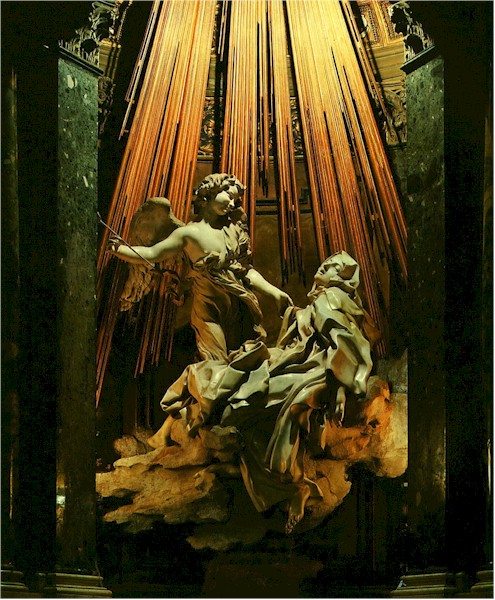
Ever since watching a programme about it last Friday, I can't stop thinking about Gianlorenzo Bernini and his sculpture The Ecstasy Of St Theresa. I feel haunted. In the most transient moments - sipping a cup of tea, throwing a bag over my shoulder to go out the door, turning over in my bed in the early morning, slicing potatoes on my plate, I see the image of St Theresa's enraptured face, turned upwards, her mouth open, the fine point of an arrow entering her, a spray of golden light behind, her robe in swathes around her like liquid sunshine.

It is almost a cliche now to talk of the greatest art as being created by the most messed up people. And true, there is much powerful art that is, and has, been created by men and women where neither mental illness nor egomania is the driving force. But equally as true, genius springs from what is incomplete, flawed, sordid, neurotic, stupid, disparate and ugly. From the gutters of despair, in the midst of crashing disillusion, loss, sorrow, hatred and violence (I wonder if life itself is only as beautiful as its own despair, only as pure as its worst filth, only as strong as the weakest, most despised runt of the litter).

I think of this when I look at the Ecstasy Of St Theresa, and when I remember Bernini's torrid life story, and his dramatic depiction of this woman, a holy woman, and, in particular, of her physicality, her face and body as the meeting place or conduit for divine revelation and bliss.

I think a woman's body, in all its variations, is to me one of the most beautiful forms there is on this planet. It is one which has been, and still is the site of devotion, adoration, violation, reverence, contempt and horror in our world. Exalted, degraded, ridiculed, feared, controlled, desired in a million different ways, a woman's body is as complex as life itself, as death, as dying, as growth and decay, as desire, wanting and repugnance.

Sitting here now, under my clothes, I can feel the skin of this body that I breathe through, I can sense the blood circulating my veins, hear my heart beating in my ear if I press it to my shoulder. My breasts, my hips and vagina, my neck, legs, skin, hair, eyes, buttocks, feet, my back are all realities in and of themselves, but they're also the vehicle for a thousand different projections, some dazzling, some shimmering, some comforting, some lit up in the crudest red light or beset by howling laughter.

Some of these have been handed down to me through time, some are of my era, some through art, through philosophy, religion, culture, literature. Some are inside my own head, most surround me from the outside, from the voices of men, from the voices of women talking to men, from the voices of women who do not care what men have to say. From my mother, from my father.

Am I ever my own woman, I ask myself, can I ever escape this hall of mirrors, know my body beyond its own symbols?

I think of it split and ripped by giving birth, a cell multiplying inside it, growing into foetus, forming, enlarging, holding the blueprint for its own destiny, forming hands and feet, a nose, a throat. A life being born - my body as toil, violent music playing through a crackling stereo. A child moving through me, pushed out by labour and agony through the birth canal, ripped from my flesh, out into cold open air. The uncut umbilical cord, the bloody placenta.

Inside and through this female body, life is formed and grown and expelled with massive effort and incredible physical, mental and emotional intensity. And this intensity, this force and power is there, whether realised or not, in every single woman as part of her physical being.

To me, this force inside a woman is beautiful, and messy. It is complex and it is also the simplest force in the world. A force not different from that of the uncovered grave, a corpse peeping out at us from under the soil. Or from a puja on the Ganges, in a blazing light of candles. Or the baby floating past, its head, a bloated shrine. Its skin, grey.

And yes, it is The Ecstasy Of St Theresa, hovering in the air. But it is also Bernini, the artist who carved it, a year before its conception, sunk to the floor, a nobody, a nothing, the memory of the failure of his greatest architectural ambition ringing in his ears.

As it is the epilieptic nun, scissoring in divine rapture across the wooden floor, eyes rolling in the back of her head. She is not pretty. She is not even beautiful. Only a coarse woollen robe, two pairs of old hands holding her spindled tattered frame in the sunlight that pours through the stained convent windows, too bright to bear without her palm across her face.

And this same force is also Bernini's illicit lover, Constanza, in marble, the loop of her cotton blouse pulled slightly undone, her eyes like wildfire in a forest at night, or a tiger esaped from the zoo, once leashed and captive, now, more than untamed: out of control, hunting, hunting down.

And it is Bernini's servant with a sword, slashing at Constanza's face in retribution until it is ribbons, the pillow soaked in her blood, the colour of her most beautiful dress, of her lust. She will never again have a face that can be immortalised in sculpture. The Muse becomes damaged goods, fallen from ecstatic grace, imprisoned for fornication, disfigured.

So it is Constanza who pays the greatest price for passion, and after nearly killing his own brother and scarring her face for life, the real perpetrator goes free: Bernini, the great hero of Rome becomes an even greater hero, the great hypocrite, scoundrel, egomaniacal amour, liar, destroys and violates in the name of love all that he once created and revered as beautiful, as divine. This woman who was his Muse, who became marble, who fired one of the greatest sculptors in history's world with a blaze of signifiers. Who torched it all with her own betrayal. Whom he will never want again. Whom he will never again watch sleeping through the night, holding his breath lightly so as not to wake her. Whom he will never long to press her small head into his chest as though she were his own restless child.

And now her face is a map of stars, all traced in blood, her honour a withered flower, her wildfire burnt out beyond all reason. Where is left for the woman to go? At Bernini's command she is again caged, this time in a damp prison cell without light, in rags and humiliation, taught the lesson that all women who play with fire must learn in 17th century civilisation, the image of her passion, her beauty, her womanhood, consigned to a sunless locked vault.

This same man conceived and gave birth to the remarkable, transcendent Ecstasy Of St Theresa, long after the light had left his eye, long after such tragedy and violence, after his own sudden descent into failure and his turning to God. And this same woman, Constanza, also gave birth to it, and is enfolded within the creases of St Theresa's robes, in the openness of her mouth, her half closed eyes, though almost certainly neither she or Bernini will have ever known, will ever know this.

Woman, Muse, sister, daughter, mother, virgin, slut, truth, beauty, warfare, corruption, fertility, deceit, the earth, the stars, the moon, the fields, the tether, the breaking of all mundane bonds, the higher, the lower, animal, angel, divinity, a flower, a rose, the scent of death...these words and images haunt me, as the Ecstasy Of St Theresa haunts me, as Constanza and the nun haunt me, as a woman who, like every other woman, is all of these things, who is Constanza and St Theresa, Bernini and the ecstasy itself, and, who, in the middle of the night, or when sipping tea, or throwing a bag over her shoulder to go out of the door, slicing potatoes, is none of them, never has been, and never will.


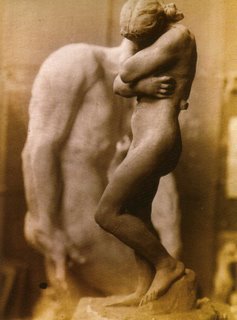
(top image: 'Eve', Rodin's studio, 'Cain' in background.)

Monday, October 09, 2006

Snowdon


I'm just back from a week in North Wales to see my Mum and sister, and to explore my native country.

I began the journey at my Mum's house, staying with my sister. We visited Mum in the special nursing home the next day, the first time I had seen her there since she got transferred there from hospital last week. I thought I'd be ok with it, thought somehow that her being settled somewhere would make it easier to comprehend her situation, but it didn't. I spent the first afternoon with a dazed head that wouldn't quite attach back to my body, as I walked in and out of her bedroom, nauseous and lost.

The second visit the following day was worse somehow, my Mum has a chest infection again, which is never easy to see her in such physical distress. In the end I had to walk outside in the cold Autumn air with my sister, and rail at the whole situation. It all just felt sick, cruel that Mum is being put through all this struggle in the name of living, when it seems to me that her time has come. I have had it said to me that maybe her time hasn't quite come, maybe she is hanging on for something that we cannot comprehend. Maybe. But without two drips feeding and medicating her, she would not be here right now - it is only thanks to the wonders of modern medicine, and a philosophy that says we must have life, no matter the cost, that she hangs on.

It brings a lot up for me, seeing my Mum like this, in terms of issues such as euthanasia and a human being's free will. It seems we cannot even determine our own death anymore, we can't die with dignity or self-determination, instead we must ebb our days out in state funded nursing homes. I know it is a complex subject, but somewhere it just seems wrong, wrong to subject a person to this. I guess it is perhaps only when it happens to someone you love that you realise what an important and painful subject euthanasia is.

I guess death itself is such a complex thing. Determining at what point someone is still deemed alive or capable of life or having any quality of life is a difficult thing to assess. People don't want to be responsible for making that choice of potentially ending lives that could have maybe been lived longer or even saved. But the price is that people are forced to live on, and it seems in this culture, no one realises that that is often worse thing than dying, for the person, for their family.

As I was sitting outside the nursing home with my sister, I became aware just how kind and strong my sister was. She understood all my anger, my fear, my fear, my panic, my loss. But every day that I was unable to come and see Mum because I live so far away in Brighton, she was there, day after day, going to see her, wiping her mouth and brushing her hair, holding her hand and playing her the radio. In the face of all this seemingly impossible and boundless suffering, she told me in her own way, that there were still little acts of love she could give to our Mum, there was still dignity and humanity she could bring to the situation, and that is what she would do, to the end.

After talking with my sister outside on the front bench, I felt renewed courage, and wasn't afraid or angry anymore. No time for that, these moments are too precious. I returned to my mother's room, somewhere more at peace. It is no surprise that we resist the truth, the awful truth of sickness and dying, because it just hurts so much. The pain of having to let go, in a situation over which, ultimately, I have no control, is hard. But when I can stop resisting, stop struggling, somewhere there are moments of peace, things are just as they are, and I am back again, loving, no longer afraid.

Wednesday night, Bob arrives, on a late train, that was late. We all go to meet him at the station. Thursday is the day he and I take the train to Snowdonia to climb the biggest mountain in Wales.

Wednesday, October 04, 2006

Darkness When The First Light Was Born

Homage to the world. Homage to the raging fires that eat it alive. Homage to tomorrow. Homage to the day when none of us will wake up. Homage to ships and planes. Homage to speeding clouds. Homage to the stripe on the zebra's back. Homage to all fallen prey. Homage to the predatory. Homage to light. Homage to the baby's skull. Homage to machinery. Homage to apparatus. Homage to buildings and to streetlights. Homage to my sisters. Homage to bad friends. Homage to mistakes. Homage to silent birds. Homage to snow.

Homage to stereos. Homage to the yellow stain on my mother's nightdress. Homage to kissing. Homage to fingers. Homage to harrowed eyes. Homage to brilliance. Homage to stupidity. Homage to sex. Homage to abstinence. Homage to a blue sky. Homage to apples, unripened fruit. Homage to leprosy of the soul. Homage to worshippers. Homage to the uncontrollably vain. Homage to TV. Homage to the hermitage on a hill. Homage to the ringtones of teenage children. Homage to their fathers.

Homage to the dying. Homage to every tear wept at their bedside. Homage to my mother. Homage to my father and his ebbing mind. Homage to animals and to beasties. Homage to the night. Homage to the frail, the ugly. Homage to superstars. Homage to the brave. Homage to power stations. Homage to sadists. Homage to euthanasia. Homage to the suicidal. Homage to insects. Homage to bats, eaten alive by beetles. Homage to caverns. Homage to church steeples.

Homage to the beatific. Homage to the horrific. Homage to the damaged and needy. Homage to air. Homage to sunlight. Homage to wrinkles. Homage to breath. Homage to limbs. Homage to eyesight. Homage to decay. Homage to the Atlantic Ocean. Homage to gravestones. Homage to small Northern towns. Homage to nonsense. Homage to the written word. Homage to mystics. Homage to tenderness. Homage to the cry of the wind. Homage to bad smells. Homage to the face in the mirror. Homage to you. Homage to me. Homage to waving goodbye. Homage to the end.